Cold shower at 6 am. A puddle in the Hot Water Cupboard. A power bill that’s gone up $30 a month for no obvious reason. These are the moments when most Auckland homeowners realise their water cylinder has been quietly failing for months.
The good news: your hot water cylinder almost always gives you warning signs before it gives up entirely. Catch them early, and you’ve got options and time to plan. Miss them, and you’re looking at emergency callouts, water damage, and a replacement job done under pressure.
Below, we cover the 7 most common water cylinder problems, how long a hot water cylinder lasts, what replacement actually costs in New Zealand, and what to expect from water cylinder installation services in Auckland. By the end, you’ll know exactly what to do next.
Got an active leak or no hot water right now? Call Matthews Plumbing & Gasfitting on 09 416 4084. We’re also available 24/7 for emergencies across Auckland.
Quick Glance
Your water cylinder runs every single day. Over years of use, sediment builds up, components wear, and small inefficiencies compound into real problems. The trouble is, the early signs are easy to miss: a slightly longer warm-up time, a small drip near the base, a power bill that’s crept up quietly.
Left alone, small signs escalate fast. A dripping valve becomes a leak. Sediment build-up leads to element failure. An ageing thermostat causes unpredictable temperature swings. The difference between a $300 repair and a $2,500 replacement often comes down to how quickly you act.
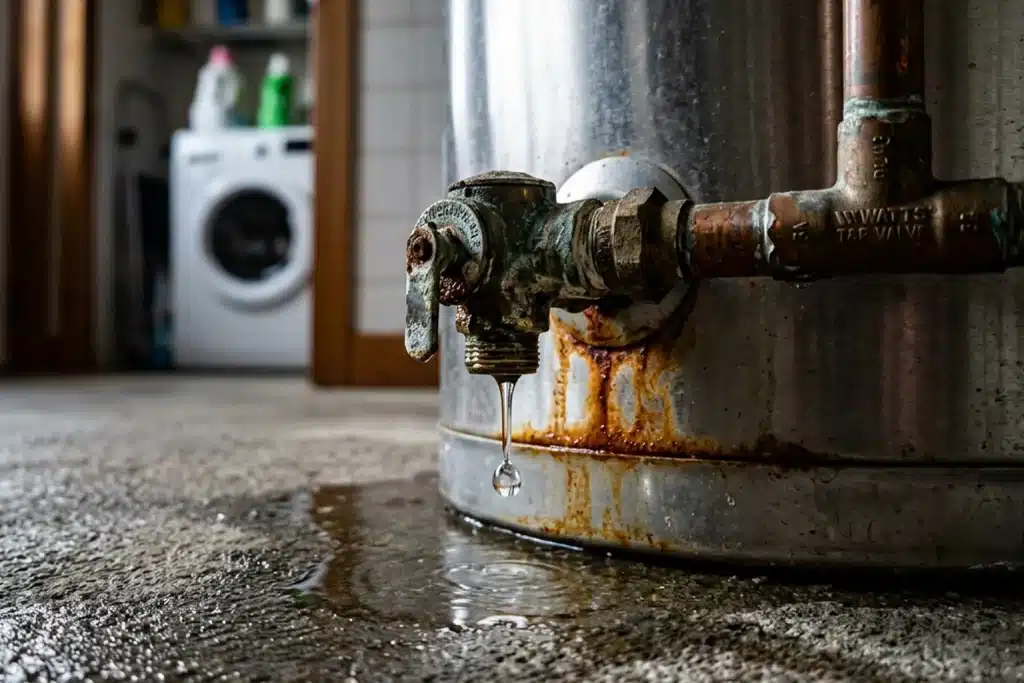
Leaks come from a few places: loose fittings, corroded joints, a failing pressure relief valve, or (worst case) a crack in the tank itself. Water pooling at the base of your cylinder, or visible dripping from any valve or joint, isn’t something to monitor. It needs attention today.
If the leak is from a valve or fitting, a licensed plumber can often fix it in a single visit. A faulty pressure relief valve is a parts-and-labour job, not a full replacement. Expect to pay $200–$600 for these types of repairs.
If the tank body itself is leaking, it can’t be patched. Once the inner lining fails and the steel starts corroding, replacement is the only option. The longer you leave it, the greater the risk of serious water damage to your floor, walls, and cabinetry, which can add thousands of dollars to your total cost.
If your cylinder is actively leaking, call us now on 09 416 4084 or request a quote, and our team will get to you fast.
Running out of hot water faster than usual? The three most likely causes are sediment build-up reducing usable tank capacity, a failing heating element that can’t keep pace with demand, or a cylinder that was undersized for your household from the start.
Has your family grown? Do you have teenagers who shower twice a day? A 135-litre cylinder that worked fine for two adults often can’t keep up with a family of four or five. This is one of the most common reasons Auckland homeowners choose to upgrade rather than repair, and it’s a decision worth making on your own terms, not under pressure after a complete failure. While changing your cylinder, we could look at relocating the cylinder outside and reclaim another cupboard for storage.
Weak flow from your hot taps isn’t always a cylinder problem. Sometimes it’s the pipework. But if the pressure drop is specific to hot water only, the cylinder is a likely culprit. Sediment build-up, a clogged inlet valve, or internal corrosion can all restrict flow significantly.
Many older Auckland homes still run on low-pressure (gravity-fed) hot water systems. If you’ve been living with weak shower pressure for years, replacing an ageing low-pressure cylinder with a modern mains-pressure system is often a genuine quality-of-life upgrade, not just a like-for-like swap. Our team can advise whether your home’s setup supports the switch.
Hot water heating accounts for around 30% of the average New Zealand household’s energy bill. An older cylinder with degraded insulation, a struggling element, or internal sediment build-up has to work harder to maintain temperature, and you pay for every extra kilowatt.
A cylinder that’s 15 years old and running inefficiently can cost an extra $200–$400 per year in energy alone. That adds up fast, and it’s often the tipping point that makes replacement the smarter financial call, even before the cylinder fails outright. A new, well-insulated cylinder pays for itself sooner than most homeowners expect.
If your shower flips between scalding and freezing without warning, or your hot water never quite reaches the temperature you’ve set, something’s failing internally. Beyond the frustration, water that’s too hot is a genuine safety risk, particularly for young children and older family members.
Temperature instability usually points to a failing thermostat, a worn heating element, or a faulty tempering valve. These are repairable in most cases, but only if the cylinder itself is in reasonable condition. If yours is already old and showing multiple signs of wear, repeated repairs often aren’t worth the investment.
Your cylinder shouldn’t make noise. Rumbling, banging, popping, or hissing all signal something wrong inside. Rumbling and popping almost always point to sediment build-up at the base of the tank, where minerals from your water supply settle and harden over years of use.
As sediment builds, your heating element has to work harder to heat the water. That extra strain shortens the element’s life, reduces efficiency, and eventually damages the tank lining. A flush can sometimes help in newer cylinders, but in older units, noise is usually a sign the end is near.
Most hot water cylinders in New Zealand last 10–15 years. Rheem and Rinnai are the two most common brands in NZ. A well-maintained cylinder in a low-demand household can push past that, but past the 10-year mark, performance issues become increasingly likely.
An ageing cylinder doesn’t always fail dramatically. It slows down: longer heat-up times, slightly reduced pressure, and a gradual rise in energy costs. These aren’t just inconveniences. There are signs that internal components are wearing out, and the risk of sudden failure is increasing month by month.
When a water cylinder hits its mid-teens, repair calls start stacking up. Element one year, thermostat the next, valve after that. Each repair is manageable on its own, but when you add them up against the cost of a new installation, the math usually tips towards replacement sooner than expected.


If your cylinder is under 10 years old and the fault is isolated, such as a faulty element, a dripping valve, or a thermostat that needs replacing, repair is almost always the right call. Parts and labour for these jobs typically run $200–$600, and your cylinder still has plenty of life left.
If your cylinder is over 15 years old, has a leaking tank body, or has needed multiple repairs in the past two years, replacement is the better investment. You’re not just fixing a problem. You’re buying another 10–15 years of reliability and efficiency without the callouts.
Ask how old the cylinder is, whether the tank body is compromised, and what the repair cost is as a percentage of replacement. A useful rule of thumb: if repair costs exceed 30–40% of the price of a new installation, it’s time to replace.
The cost of installing a new water heater system in New Zealand depends on the type of system (electric, gas, or heat pump), cylinder size, site access, and whether any compliance or electrical work is needed. There’s no single price, but there is a reliable range.
For most Auckland homes, a straightforward electric cylinder replacement runs $2,000–$3,500, including supply and installation. A gas continuous flow system typically costs $2,000–$4,000, with additional costs if gas lines need upgrading. Heat pump systems cost more upfront but deliver meaningful savings in running costs over time, which is worth considering if you’re replacing an older electric cylinder.
A single repair might cost $300–$800. But if you’re repairing a 14-year-old cylinder, you could face the same bill again within 12 months, or worse, a full emergency replacement, which always costs more than a planned one. Getting a quote now, while the system is still functioning, gives you time to compare options without the pressure.
A standard water cylinder installation in Auckland takes around 3-5 hours for low pressure or 7-9 hours for mains pressure swap. Your licensed plumber will remove the old unit, install the new cylinder, connect pipework and electrical or gas supply, test the system, and confirm everything meets NZ compliance requirements before they leave.
In New Zealand, only a registered plumber or gasfitter authorised by the Plumbers, Gasfitters, and Drainlayers Board can legally install a hot water cylinder. Beyond legality, a licensed installer ensures your system meets the relevant NZ Standards and won’t void your manufacturer’s warranty. Matthews Plumbing & Gasfitting are registered Master Plumbers, and we back every installation with a one-year workmanship guarantee.
Size matters. A 180-litre cylinder is the most common size for NZ households, but a family of five may need 250 litres or more. Your fuel type choice (electric, gas, or heat pump) should factor in your current connection, usage patterns, and long-term running costs. Not sure what suits your home? Request a quote, and we’ll assess your setup and give you a straight recommendation, no obligation.
Call a plumber today, not next week, if you’re seeing water pooling around your cylinder, no hot water at all, discoloured (rusty or brown) water from your taps, or your cylinder is making loud, unusual noises. These aren’t minor inconveniences. They’re signs of system failure or a potential health risk.
If your cylinder is actively leaking, turn off the cold water supply to the unit (usually a valve on the inlet pipe). If it’s electric, switch it off at the switchboard. Don’t attempt to drain or dismantle anything yourself. Then call us on 09 416 4084, and we’ll be there fast. We’re available 24/7 for emergencies across Auckland.
It depends on the source. A leaking valve or fitting can usually be fixed. A leak from the tank body itself indicates the cylinder needs a full replacement, as the inner lining has failed and can’t be repaired.
Most cylinders last 10–15 years. Rheem and Rinnai offer 10-year warranties, but with good maintenance and moderate demand, some run longer. If yours is in its mid-teens and showing performance issues, start planning for replacement rather than waiting for a failure.
A standard electric cylinder replacement typically costs $2,000–$4,000 all in. Gas systems run $2,500–$3,500. Heat pump systems cost more upfront but reduce running costs over time. Final pricing depends on cylinder size, access, and any required compliance work. Matthews Plumbing provides clear, upfront quotes before any work begins.
Under 10 years old with an isolated fault, repair. Over 15 years old with a leaking tank body or repeated repairs, replace. A licensed plumber can assess your specific situation and give you an honest call either way.
Yes. Matthews Plumbing & Gasfitting provides hot water cylinder repairs, replacements, and full installations across Auckland. We’re registered Master Plumbers, we offer upfront quotes, and we’re available for emergencies around the clock. Call us on 09 416 4084 or get in touch here.