
The new granny flat rules for 2026 officially allow Aucklanders to build standalone dwellings up to 70 square metres without a building consent. This change helps many families add space to their property without the usual mountain of local council paperwork.
We know this update feels like a massive win for homeowners who want to build quickly. However, there are a few caveats that you wouldn’t want to miss.
Many people mistakenly assume that “no consent” means they can do all the work themselves.
While the law allows for a simpler process, the actual construction must still be completed or supervised by a Licensed Building Practitioner (LBP). Furthermore, the law still requires a professional for some utility systems in your home, including water pipes and general plumbing work.
DIY-ing your plumbing sounds like something that would help you save money. But this is not the case in the long run. We’ve seen multiple DIY attempts in our day-to-day that lead to expensive leaks or failed inspections later. It’s for this reason that the government still requires professional plumbers to work on your water pipes.
In this article, we’ll talk about:
In summary, the granny flat rules for 2026 remove the need for a building consent on small units. However, all plumbing remains restricted work that only a licensed professional can legally perform.
The Government designed the NZ granny flat exemption to tackle the housing shortage by cutting red tape on properties that already have a primary residence. This update is a huge win for Aucklanders who want to provide a self-contained space for relatives or create a rental unit right in their own backyard.
However, to fit within the building consent exemptions for 2026, your project must meet specific criteria. Here are a few major ones you need to consider:
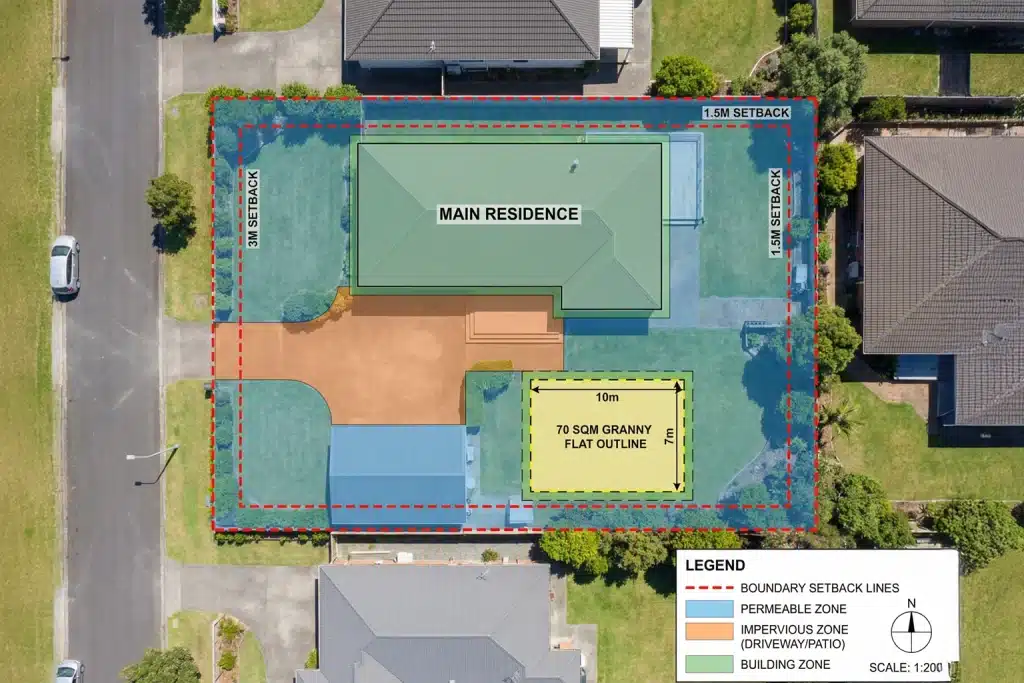
We recommend checking your site coverage and boundary setbacks before you even think of starting your granny flat project. Remember, even without consent, you must follow the district plan for your specific area in Auckland.
You can find the full details in the MBIE Granny Flat Exemption Guidance. These rules aim for simple designs that do not pose a high risk to the safety of your family and the surrounding properties.
Even with the granny flat rules 2026 in place, the law classifies pipework as restricted building work (RBW).
What does this mean?
The RBW states that only a person with a current license can carry out or supervise the installation of any pipework. The Building Act Schedule 1A makes it clear that exemptions for the structure do not apply to sanitary systems. You must ensure every pipe and fixture meets the strict requirements of the New Zealand Building Code.
This is where we come in. Our plumbing services will ensure that you comply with G12 for water supplies and G13 for foul water.
The G12 standard ensures your small, standalone dwelling in NZ receives a safe and reliable supply of potable water for drinking and hygiene. We carefully calculate pipe diameters to maintain consistent pressure while installing backflow prevention devices to stop any contamination from entering your fresh water lines. These technical steps are a legal necessity under the Building Consent Exemptions 2026 to protect the health of everyone living on your property.
The G13 standard dictates how we manage the removal of wastewater from your kitchen, laundry, and bathroom fixtures. We design these systems with the correct gradients and venting to ensure foul water flows efficiently into the main sewer without causing blockages or smells. Adhering to these granny flat building code requirements is a vital part of sanitary plumbing and drainlaying that keeps your new home clean and functional.
We also assist building companies that need to protect their warranties and LBP status.
If an unlicensed person performs sanitary plumbing and drainlaying, it can void insurance policies for the entire property. We provide the legal paperwork to prove the job meets national standards.
We can offer a complete “start to finish” service for your small, standalone dwelling NZ project. We have a number of builders we work very closely with and can provide a full service for all our clients across Auckland.
We make sure your water and wastewater lines connect correctly to the main city networks. This prevents issues like low pressure or blocked drains that often plague poorly planned builds.
You can see below some examples of our plumbing and gasfitting services, which we do for our clients from start to finish.
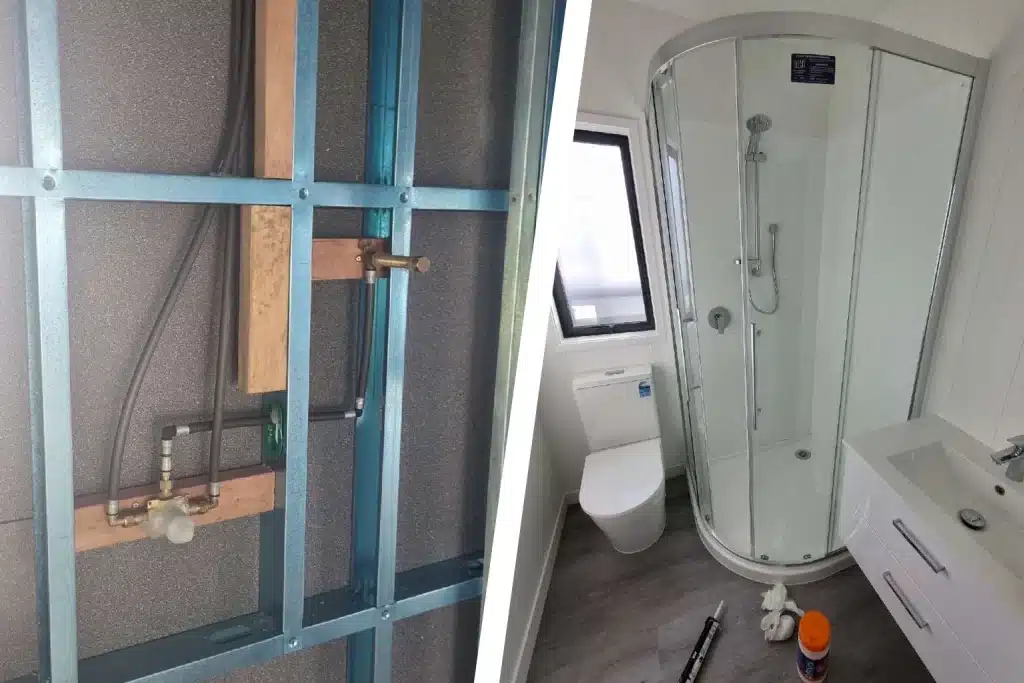
Our portfolio is built on years of collaboration with established building firms. Together, we’ve already been creating tiny homes that prioritise both design and durability.
This partnership allows us to work alongside builders to ensure the plumbing fits perfectly with the structure. We manage the messy underground work and the polished final fit-off for your kitchen and bathroom. You can click this link to see examples of our work.
Before you buy any materials, you should request a PIM from the council. This document tells us about the ground conditions and where existing services lie. We use this data to plan the most efficient route for your new pipes.
A good granny flat building code-compliant design considers how waste leaves the building. We map out the sewer and stormwater connections early to avoid digging up your driveway twice. This phase ensures your tiny house plumbing in NZ is durable.
As the building goes up, we install the internal pipework and venting systems. We supervise every stage to ensure the work remains high quality. This step is where we verify that all materials used meet New Zealand standards.
Once we finish, we provide you with a record of work (RoW). This is a vital legal document that proves a licensed plumber in Auckland completed the job. You will need this if you ever decide to sell your property in the future.
No, you do not need consent if the unit is under 70 square metres and meets the granny flat rules 2026 criteria. However, you must still follow the building code for all construction and plumbing.
No, you cannot. All sanitary plumbing and drainlaying is restricted work and requires a licensed professional by law.
Only a licensed or certifying plumber can sign off on this work. We provide the necessary documents to the council to confirm that the work is safe.
A record of work (RoW) is a document signed by the licensed practitioner. It confirms that the restricted work they did or supervised complies with the building code.
The new granny flat rules for 2026 make it easier to add value to your property without unnecessary delays. While the rules for the structure have changed, the high standards for your plumbing stay the same.
We focus on providing end-to-end service for homeowners and builders across Auckland.
Let our team take the stress out of the technical details so you can enjoy your new space. Contact Auckland’s trusted plumbing experts today to discuss your project.